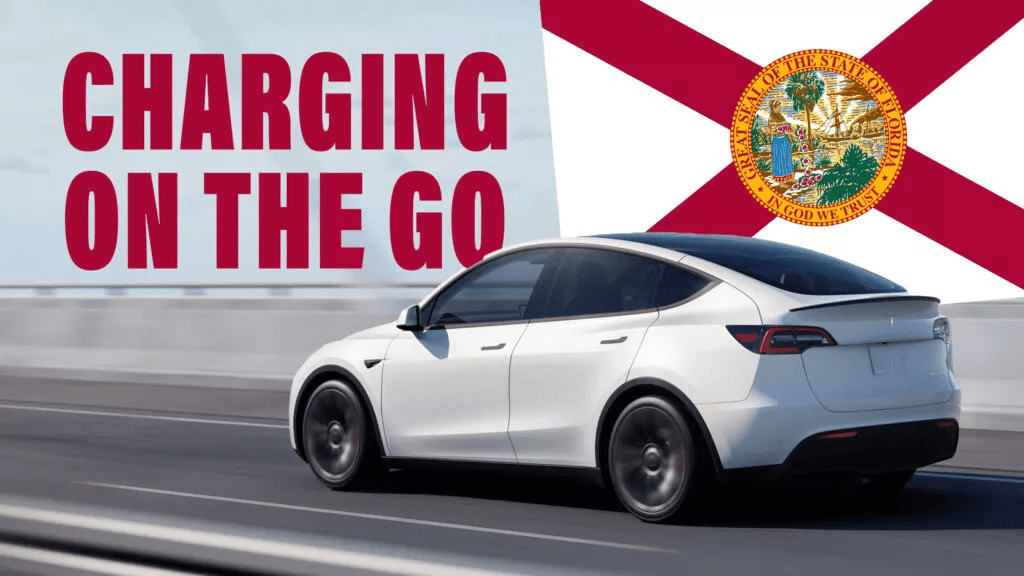
“EV drivers in Central Florida just took a step closer to that sci-fi dream becoming a reality because the state has just granted approval for a new toll road that will contain an electrified section capable of charging electric cars. To be called State Road 516, the east-west link connects Highway 27 in Lake County and State Road 429 in Orange County.”
Central Florida Expressway Authority (CFX) has partnered with two companies. The actual charging requirement of the road is under ENRX. The other is an oddball, called ASPIRE. They are an engineering research center at Utah State University. We say “oddball” because Florida has a lot of universities in both green technology & mobility research. It would seem prudent that local tolling boards & state legislatures would rather spend tax money locally, when possible, right?
Anyways, induction-based technology used within roadways has been around for some time as “ENRX has already taken part in several trials in Europe stretching back 25 years and delivering 180 kW of juice to the EVs that the road automatically detects moving above it.”
Unfortunately, State Road 516 cuts through pristine land. Though the road will provide passage for wildlife below, most elevated roadways found in cities to rural areas are typically the nosiest & polluted. They are also disruptive to travel (you only have specific points under a highway). If people don’t like highways in their backyards, it is safe to assume most sentient life doesn’t either.
TSTB thoughts? CFX is clearly “greenwashing” a highway that will put taxpayers’ credit on OVER $100 MILLION of pavement per mile. If this were an honest green effort, CFX wouldn’t build a highway in a preserved area. Instead of only servicing those who are privileged to afford the high costs of EVs (a small number), it would make more sense for tolling authorities to capture Vehicle Miles Traveled or VMT and provide two fee rates. One at a set rate & another that would be tied to heavier freight use & congestion pricing (meaning tolls would go up during heavy traffic). You can provide all sorts of incentives to avoid VMT tolls, like using transit to carpooling.
Capturing VMT is the most practical and fair approach because it is not regressive- you only pay the miles you use instead of getting a flat fee for all. Capturing VMT also provides practical data to public transportation agencies, so they have a clear picture of how roads are used to better plan and price out new transportation projects much more accurately. Further, VMT can be indexed to track the amount of air pollution. EVs do emit rubber & brake particulates.
It would seem we would rather take an interest in what car you have and build roads with services beyond our state and over the pond.
https://www.carscoops.com/2023/12/new-florida-toll-road-will-charge-evs-as-they-drive/

 The Trolly Stop Tampa Bay
Leave a comment